After a fire: documenting the damage without entering the building
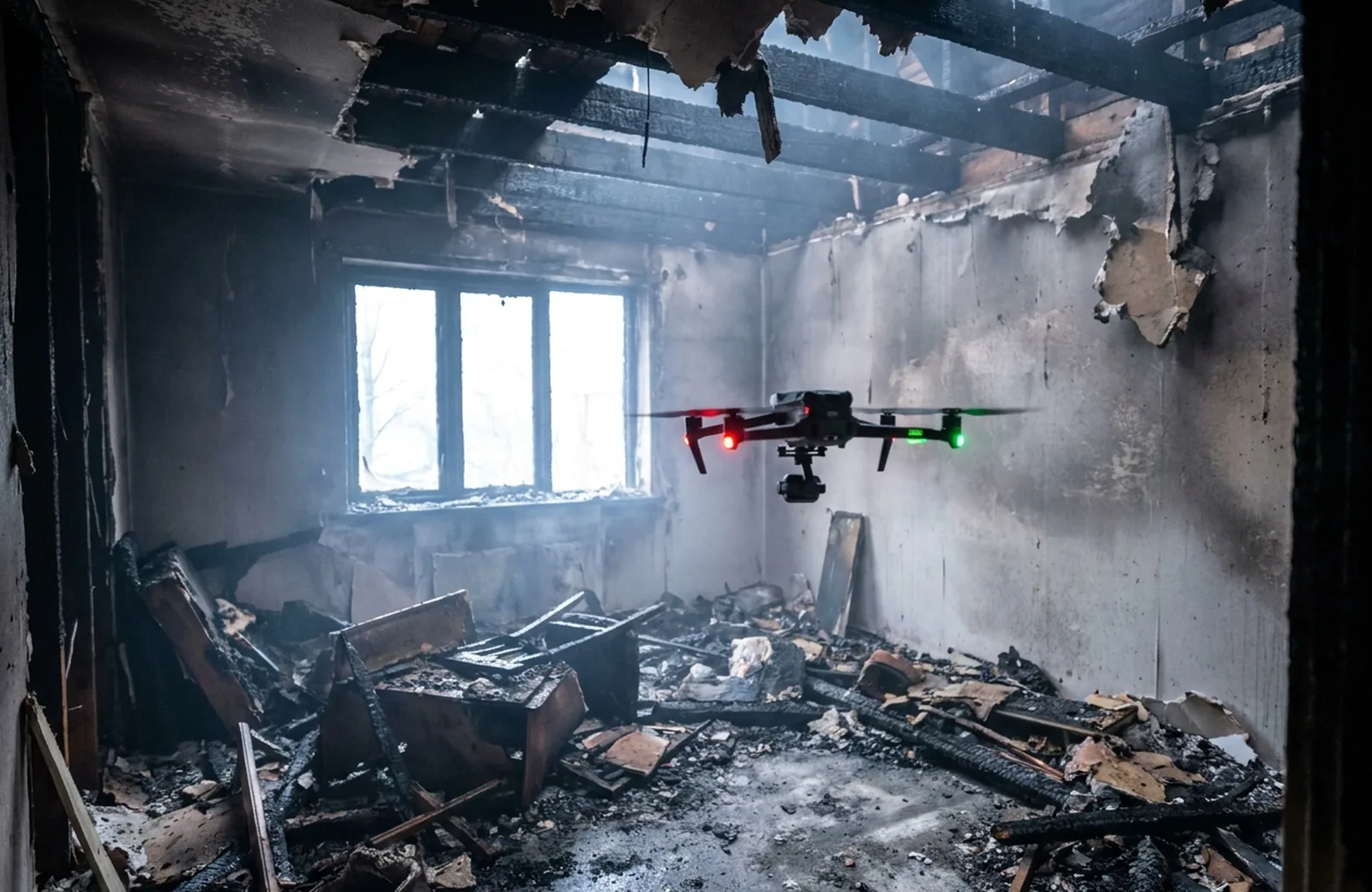
After a fire the structure is in question. Ceilings have burnt through, stairs no longer carry, and debris hangs in the smoke that can come down at any moment. The damage still has to be recorded, and it has to happen before anything is cleared away. Once it is gone, it cannot be evidenced.
The core problem: securing evidence without putting anyone at risk
Insurers and loss adjusters need a complete picture of the day after. Walking through a building at risk of collapse to get it means taking a risk that can be avoided. A small drone can fly into those rooms without anyone crossing the threshold.
How an indoor flight works
I fly room by room, slowly and systematically, with my own lighting. That produces images and video of walls, ceilings and floors, plus close-ups of what matters: the seat of the fire, smoke lines, burnt-through beams, swollen partition walls. From the overlapping footage a spatial model can also be computed, one you can move through later as if you were there.
It is just as useful after water damage, for example when a roof structure has been flooded and nobody can judge how far the moisture has travelled.
What it means for the claim
The loss adjuster gets material that was not pieced together afterwards but shows the condition at a fixed point in time. Arguments about whether damage was already there beforehand can often be cut short. And whoever refurbishes later can plan from the footage instead of relying on memory.
What you should prepare
Only two things matter: the fire service has to have released the building, and nothing should have been cleared yet. Everything else we sort out on site. If it is urgent because the refurbishment is due or the adjuster's appointment is looming, just get in touch. I fit those jobs in.
Sounds like your project?
Tell me briefly what it is about. I get back to you with an assessment and a quote, usually the same day.
Start an enquiry